
USG Lower Abdomen / Pelvis scan
- Home
- Radiology Services
- USG Lower Abdomen / Pelvis scan
What is a USG Lower Abdomen / Pelvis scan?
Why is this scan done?
- Lower abdominal or pelvic pain
- Irregular menstrual cycles
- Difficulty or discomfort during urination
- Abnormal vaginal bleeding or discharge
- Suspected ovarian cysts or uterine fibroids
- Monitoring of follicular development (in infertility)
- Assessment of urinary bladder, prostate, or pelvic masses
What organs are seen in this scan?
- Uterus
- Cervix
- Endometrium (uterine lining)
- Ovaries and fallopian tubes
- Urinary bladder
- Pouch of Douglas (space behind the uterus)
- Prostate gland
- Seminal vesicles
- Urinary bladder
- Pelvic soft tissues
Why choose Mitra Diagnostics for your Pelvic Ultrasound?
- Scans performed by experienced radiologists
- High-resolution and advanced ultrasound machines
- Female sonographers available for patient comfort
- Quick, reliable, and affordable diagnostic services
- Online access to reports and images
- Lifetime benefits with Mitra Health Card
Contact Us
- 072076 10053
- 040 35511069
- Panchayatiraj Teachers Colony, B.N Reddy Nagar, Hyderabad
More Frequently Asked Questions
Is any preparation required?
Yes, a full bladder is required for better visualization.
- – Drink 3–4 glasses of water about 30–45 minutes before your appointment.
- – Do not urinate until after the scan is completed.
A full bladder pushes the intestines aside and helps the sound waves get a clearer image of pelvic organs.
How is the scan performed?
- – You’ll lie on your back on the ultrasound table.
- – A clear gel will be applied to your lower abdomen.
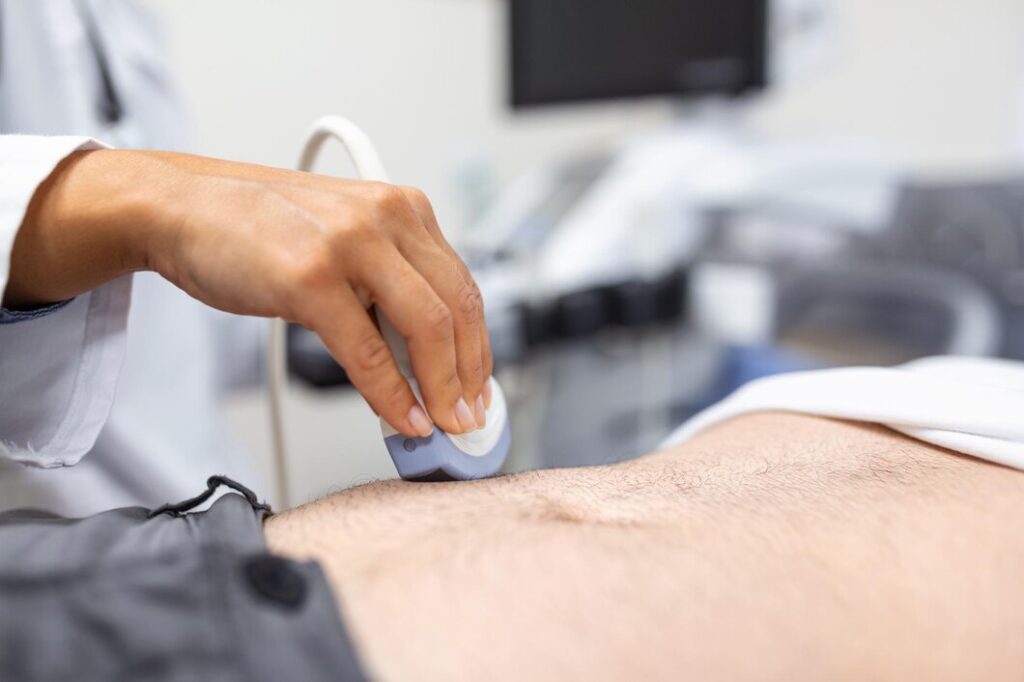
- – The sonographer or radiologist will move a small transducer probe over your skin.
- – The scan is painless, non-invasive, and takes 10–15 minutes.
What is the difference between abdominal and pelvic scan?
- – Abdominal scan shows upper organs (like liver, kidneys, spleen, pancreas).
- – Pelvic scan focuses on lower organs (like uterus, ovaries, prostate, bladder).
Sometimes, both are combined as a whole abdomen scan for complete evaluation.
Is it safe?
Yes.
Ultrasound uses sound waves, not radiation, making it completely safe — even for pregnant women and children.
When will I get my report?
Reports are usually ready within 30–45 minutes after the scan.
Are there different types of pelvic scans?
Yes. Depending on your doctor’s advice, one of the following may be done:
- – Transabdominal Pelvic Ultrasound – done over the lower abdomen (requires full bladder).
- – Transvaginal Ultrasound (TVS) – done with a thin internal probe for clearer uterine and ovarian details (used for infertility, early pregnancy, or bleeding issues).
- – Transrectal Ultrasound (TRUS) – done for detailed prostate evaluation in men.
All are safe and performed under professional supervision with patient comfort ensured.
What can this scan detect?
The scan can help identify:
- – Uterine fibroids or endometrial thickening
- – Ovarian cysts or masses
- – Pelvic inflammatory disease
- – Prostate enlargement
- – Urinary bladder wall abnormalities or residual urine
- – Free fluid in the pelvis
- – Follicular growth and ovulation timing (in infertility)
Will the scan cause any pain or discomfort?
No, the procedure is painless.
You may feel mild discomfort due to a full bladder, but that eases right after the scan when you can empty it.
Summary
A USG Lower Abdomen / Pelvis scan is a simple, safe, and effective way to evaluate reproductive and urinary organs.
At Mitra Diagnostics, we ensure accurate imaging, patient comfort, and complete privacy during every scan.
More Frequently Asked Questions
Is any preparation required?
Yes, a full bladder is required for better visualization.
- – Drink 3–4 glasses of water about 30–45 minutes before your appointment.
- – Do not urinate until after the scan is completed.
A full bladder pushes the intestines aside and helps the sound waves get a clearer image of pelvic organs.
How is the scan performed?
- – You’ll lie on your back on the ultrasound table.
- – A clear gel will be applied to your lower abdomen.
- – The sonographer or radiologist will move a small transducer probe over your skin.
- – The scan is painless, non-invasive, and takes 10–15 minutes.
What is the difference between abdominal and pelvic scan?
- – Abdominal scan shows upper organs (like liver, kidneys, spleen, pancreas).
- – Pelvic scan focuses on lower organs (like uterus, ovaries, prostate, bladder).
Sometimes, both are combined as a whole abdomen scan for complete evaluation.
Is it safe?
Yes.
Ultrasound uses sound waves, not radiation, making it completely safe — even for pregnant women and children.
When will I get my report?
Reports are usually ready within 30–45 minutes after the scan.
Are there different types of pelvic scans?
Yes. Depending on your doctor’s advice, one of the following may be done:
- – Transabdominal Pelvic Ultrasound – done over the lower abdomen (requires full bladder).
- – Transvaginal Ultrasound (TVS) – done with a thin internal probe for clearer uterine and ovarian details (used for infertility, early pregnancy, or bleeding issues).
- – Transrectal Ultrasound (TRUS) – done for detailed prostate evaluation in men.
All are safe and performed under professional supervision with patient comfort ensured.
What can this scan detect?
The scan can help identify:
- – Uterine fibroids or endometrial thickening
- – Ovarian cysts or masses
- – Pelvic inflammatory disease
- – Prostate enlargement
- – Urinary bladder wall abnormalities or residual urine
- – Free fluid in the pelvis
- – Follicular growth and ovulation timing (in infertility)
Will the scan cause any pain or discomfort?
No, the procedure is painless.
You may feel mild discomfort due to a full bladder, but that eases right after the scan when you can empty it.
Summary
A USG Lower Abdomen / Pelvis scan is a simple, safe, and effective way to evaluate reproductive and urinary organs.
At Mitra Diagnostics, we ensure accurate imaging, patient comfort, and complete privacy during every scan.