
Manual vs Automated Body Fluid Analysis: How Modern Laboratory Technology Helps
Body fluid testing plays an important role in identifying infections, inflammation and other medical conditions. With advancements in laboratory technology, diagnostic centres now use both manual microscopy and automated analysers to examine different body fluid samples. Choosing a reliable centre for Body Fluid Analysis in Hyderabad is important for obtaining accurate laboratory findings. Mitra Diagnostics provides specialized diagnostic testing to support doctors in evaluating various health conditions through appropriate laboratory investigations.
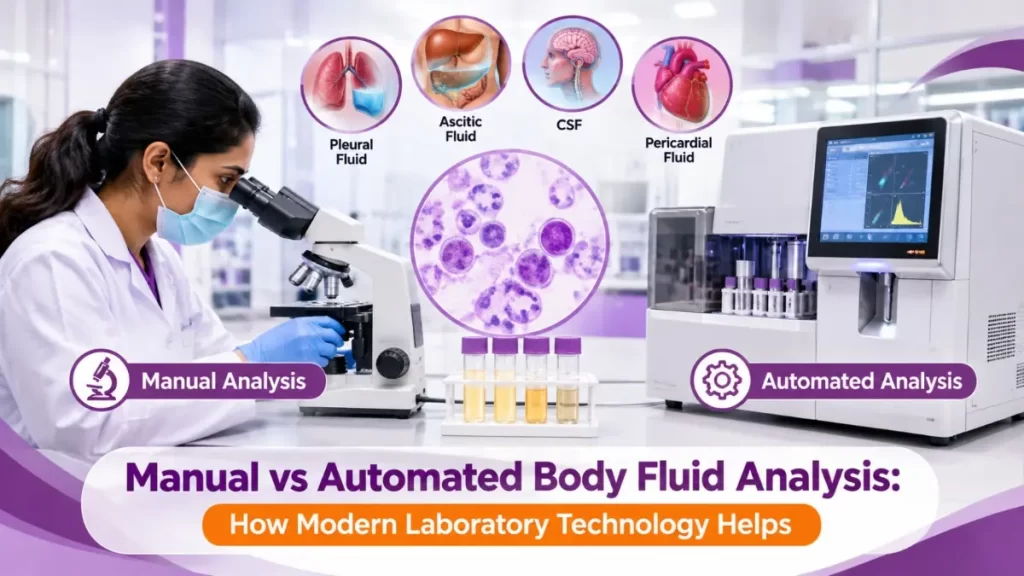
What Is Manual Body Fluid Analysis?
Manual body fluid analysis is a traditional laboratory technique in which trained laboratory professionals examine fluid samples using a microscope and other laboratory equipment.
Depending on the type of sample, the laboratory may evaluate:
- Total cell count and differential cell count
- Red blood cells and white blood cells
- Presence of abnormal or atypical cells
- Physical appearance and characteristics of the fluid
- Microscopic findings that may require further investigation
Manual examination allows laboratory professionals to observe individual cell characteristics and identify findings that automated instruments may not fully characterize.
What Is Automated Body Fluid Analysis?
Automated body fluid analysis uses advanced laboratory analysers to examine samples and provide measurements such as cell counts and other relevant parameters.
These analysers use technologies such as optical detection, flow-based measurements and cell differentiation algorithms, depending on the instrument.
Some important benefits include:
- Faster processing: Automated systems can process suitable samples efficiently.
- Consistent measurements: Standardized procedures help reduce variation in routine cell counting.
- Improved workflow: Automation can support laboratories in handling multiple samples.
- Additional parameters: Certain analysers provide detailed cell population measurements that assist further evaluation.
However, automated results may require microscopic confirmation, particularly when abnormal cells or unusual sample characteristics are identified.
Manual vs Automated Body Fluid Analysis: Key Differences
| Parameter | Manual Analysis | Automated Analysis |
|---|---|---|
| Technique | Microscopic examination | Advanced laboratory analyser |
| Processing | More time-consuming | Generally faster |
| Cell identification | Direct visual assessment | Instrument-based classification |
| Sample evaluation | Useful for detailed morphology | Useful for routine cell counting |
| Abnormal findings | Can help identify unusual cells | May flag suspicious results |
| Confirmation | Requires trained examination | May require manual verification |
Why Is Body Fluid Analysis Important?
Body fluid analysis helps doctors investigate different medical conditions by examining fluids collected from specific areas of the body.
Some commonly performed investigations include:
1. Pleural Fluid Analysis
Pleural fluid is collected from the space surrounding the lungs. Its examination helps doctors investigate conditions associated with fluid accumulation, including infections, inflammation and malignancy.
2. Ascitic Fluid Analysis
Ascitic fluid accumulates within the abdominal cavity. Laboratory testing helps evaluate possible causes, including liver-related conditions, infections and other underlying diseases.
3. Cerebrospinal Fluid (CSF) Analysis
CSF surrounds the brain and spinal cord. Its examination can support the investigation of neurological infections and inflammatory conditions.
4. Pericardial Fluid Analysis
Pericardial fluid is collected from the space surrounding the heart. Testing helps investigate the possible causes of abnormal fluid accumulation.
How Modern Laboratory Technology Supports Accurate Results
Modern laboratory technology has improved the speed and standardization of many diagnostic procedures. Automated analysers can assist with routine cell measurements, while microscopic examination helps evaluate cellular characteristics and unusual findings.
However, no single technology can replace professional laboratory interpretation. Proper sample collection, timely processing, quality control and appropriate confirmation procedures are equally important for dependable results.
Doctors interpret laboratory findings alongside the patient’s symptoms, medical history and other investigations before deciding on further treatment.
Where to Get Body Fluid Analysis in Hyderabad?
Choosing an experienced diagnostic centre is important when specialized laboratory investigations are recommended by your doctor. The laboratory should follow appropriate sample-handling procedures, maintain quality standards and use suitable testing methods.
Mitra Diagnostics offers specialized diagnostic testing to support doctors and patients with laboratory investigations. If your doctor has recommended Body Fluid Analysis in Hyderabad, explore the available testing services at Mitra Diagnostics and consult your healthcare professional about the appropriate investigation for your condition.
Frequently Asked Questions (FAQs)
1. What is the difference between manual and automated body fluid analysis?
Manual body fluid analysis involves microscopic examination by trained laboratory professionals, while automated analysis uses specialized laboratory analysers to measure and classify cells. Both methods can complement each other.
2. Which is more accurate: manual or automated body fluid analysis?
Both methods have important roles. Automated analysers provide standardized cell measurements, while manual microscopy helps examine cellular details and confirm unusual findings. The appropriate method depends on the sample and clinical requirements.
3. Why do doctors recommend body fluid analysis?
Doctors recommend body fluid analysis to investigate infections, inflammation, abnormal fluid accumulation and certain other medical conditions. The type of test depends on the patient’s symptoms and clinical history.
4. What types of samples are examined in body fluid analysis?
Common samples include pleural fluid, ascitic fluid, cerebrospinal fluid (CSF) and pericardial fluid. The laboratory performs appropriate tests based on the sample type and doctor’s instructions.
5. Does automated body fluid analysis replace manual microscopy?
No. Automated analysis supports routine measurements, but manual microscopic examination remains important for evaluating abnormal cells, unusual findings and samples requiring further confirmation.
6. Where can I get Body Fluid Analysis in Hyderabad?
You can explore specialized body fluid testing services at Mitra Diagnostics. Consult your doctor to understand which investigation is appropriate for your condition.
7. How long does body fluid analysis take?
The reporting time depends on the type of fluid, tests requested, sample condition and whether additional microscopic or specialized investigations are necessary. Contact the diagnostic laboratory for the expected turnaround time.
8. Is special preparation required before body fluid analysis?
Preparation depends on the type of fluid collection procedure. Follow your doctor’s instructions regarding sample collection, medications and any required precautions.
Conclusion
Both manual and automated body fluid analysis methods play valuable roles in modern diagnostic laboratories. While automation supports faster and standardized measurements, manual microscopy remains important for examining cellular details and confirming unusual findings. Combining appropriate laboratory techniques helps support better diagnostic evaluation.
For specialized testing and dependable laboratory support, Mitra Diagnostics is a resource to consider when looking for Body Fluid Analysis in Hyderabad. Explore the available diagnostic services and consult your healthcare professional for the appropriate testing recommendations.
Contact Us
- 072076 10053
- 040 35511069
- Panchayatiraj Teachers Colony, B.N Reddy Nagar, Hyderabad